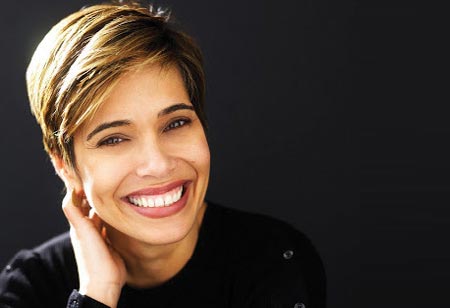
Daisy Auger-Dominguez began her career as a Credit Rating Analyst at Moody’s Investors SerVICE, transitioned into the role of the first chief diversity officer, and has not looked back ever since. Her talent and expertise in the field soon enabled her to serve Time Warner as the Managing Director for Executive Search. In the following years, she drove the diversity and inclusion policy at Disney Television Group, Google, and Viacom. Currently, she serves as the Chief People Officer at VICE Media, overseeing the company’s divisional HR functions, from recruitment to developing, onboarding, and engaging their global teams of over 2400 employees across 25 countries.
In an Interaction with Manage HR magazine, Daisy addresses everyone, from individual contributors to CEOs, to dismantle inequity and racism at the workplace and rejuvenate the system with a sense of diversity, inclusivity, and empathy.
Do you think the organizations and society at large have changed in their outlook regarding diversity and inclusion?
Organizations are starting to understand why and what needs to be changed in their culture. They know that without diversity, inclusivity, and cultural tolerance, reputation stands on a fragile line. Therefore, every board member is on high alert. Furthermore, most leaders know that they are just one social media post away from reputational oblivion. In a nutshell, we have changed as an individual, company, and society.
People who were silenced before have found their voice, and they are exercising it to bring change on a global scale. Interestingly, people who were oblivious before about the injustices inflicted on people of different races, gender, color, ethnicity, and country, are starting to feel discomfort. For all of us who are trying to eliminate racism, discrimination, and biasedness in our workspace, this is an outstanding achievement.
What are the challenges that crop up when an organization tries to implement diversity and inclusion?
There are some key obstacles hindering this practice:
First is the fear of messing up. All of us have struggled through this one time or another. I know through my experience how fear can grip your valuable insights and bar you from sharing them or be any help to your organization. So, what we need to do is manage this fear. If you genuinely try and care about your employees, you will surely enable your team to thrive and be productive tenfold! Last year at VICE Media, we doubled down on our managers and provided them with training, resources, and encouragement in managing complicated teams and scenarios.
People Who Were Silenced Before Have Found Their Voice, And They Are Exercising It to Bring Change on A Global Scale
The second is poor design. Most companies do not take feedback from their employees — women, and BIPOC — who are the main subject of this conversation. Instead, they focus heavily on the representation and outrightly ignore the cultural and environmental elements that drive exclusion. My opinion is that building trust and engagement becomes much easier when you make people feel like their opinions are valuable for the organization. We need a culture that promotes allyship and supports every employee by giving them a sense of belonging.
Diversity Fatigue is the third challenge. The work behind this change takes time, energy, strength, and patience, making it quite hard to stay interested, focused, and committed to the cause, especially when we see no progress. So, a risk that looms large is passivity and tuning out of the mission.
What piece of adVICE would you give to your peers and colleagues to overcome these challenges?
In the case of diversity and inclusion, there is no one-size-fits-all rule book. Every company has its troubles, and the solutions must be specific to them. However, I have a generic model that I share with leaders to help them jumpstart the process. I am also authoring a book, Inclusion Revolution, that focuses on this topic.
Firstly, leaders need to reflect. They need to understand what they are afraid of, what they are enthusiastic about, and what ideas they have regarding their organization’s growth. Secondly, visualizing, understanding, and resolving the drawbacks of an organizational climate and its systemic and structural barriers is a great way to build a policy. The third is taking action, where leaders analyze and accept the practice that works best in their environment and aligns well with their organization’s DNA. I call it pure pragmatism, where we fix one part of a broken system at a time. And the last one is acceptance. Accepting one’s discomfort is a significant step for an individual to change their point of view and, in turn, change the work culture. Nobody wants to hear where they fell short or when they let their teams down, but accepting the criticism and having the willingness to pivot and make positive tweaks over time is a great start to overcoming these challenges.
How do you think the future looks like for companies and their diversity and inclusion programs?
I believe that the future of work is here, and we are in it. We are building a new policy where work is far more connective, digitally engaging, and forward-thinking. Offices are turning into hubs of creativity, collaboration, and inclusion. However, this paradigm shift brings more challenges for leaders, pushing them to learn how to build, manage, and engage their teams proactively. The pandemic has already driven the leaders to reinvent their leadership capabilities to ensure better management and parity between in-office and remote employees.
For years, at VICE Media Group, we are firmly focused on developing a radically inclusive and equitable workplace where leaders and managers are resilient, empathetic, and anti-racist. We are building a culture where creativity and innovation go hand-in-hand and are willing to test, iterate, and pivot so that everyone in our organization can be successful, both professionally and personally